Performance, CrossFit, and Running Physical Therapy in Henrico: How to Keep Doing What You Love
Runner, CrossFitter, or lifter in Henrico? Get root cause physical therapy with one on one 60 minute visits at Bend PT. Book a free discovery call.
You train because it makes you feel strong, clear-headed, and like yourself. Then a nagging knee, a cranky shoulder, or a back that tightens up mid-workout starts to change your plans. If you have ever been told to "just rest" or to stop running, lifting, or playing altogether, you know how discouraging that advice feels.
You deserve more than a generic handout and a rushed appointment. You deserve someone who asks why your body is hurting, understands the demands of your sport, and helps you move forward without giving up the activities that matter to you.
That is the approach at Bend Movement in Henrico. This guide explains how performance, CrossFit, and running physical therapy work, what conditions they address, and how a personalized plan can help you get back to training with confidence.
Why Active Adults in Henrico Need a Different Kind of Physical Therapy
Active people ask more of their bodies than most. Repeated impact from running, heavy overhead lifting, and fast changes of direction place specific stress on specific tissues. Care that treats every patient the same often misses what your sport actually demands.
Many active adults describe the same frustrations:
- Short visits that leave little time to explain what is going on
- Generic exercise sheets that do not match their sport or goals
- Treatment aimed only at the painful spot
- Being told to stop training rather than being shown how to modify it
If any of that sounds familiar, you are not alone. Pain in an active body usually has a reason, and finding that reason takes time, a good eye for movement, and a plan built around your life.
What Is Performance Physical Therapy?
Performance physical therapy goes beyond recovering from an injury. It combines rehabilitation with strength and conditioning principles so you can build a body that tolerates the training you want to do.
This matters whether you are chasing a new deadlift number, preparing for a race, or simply trying to play golf or pickleball without aches the next day. The Doctors of Physical Therapy at Bend Movement bring specialized backgrounds in strength and conditioning, USA Weightlifting coaching, and dry needling. That means your therapist understands loading, programming, and technique, not only anatomy.
What Can Performance PT Help You Achieve?
A performance-focused plan can support goals such as:
- Injury prevention: Finding and addressing movement limitations before they become pain
- Strength building: Progressively loading muscles and tendons so they can handle more
- Mobility and flexibility: Improving the ranges you need for your sport or daily life
- Return to sport: Moving from rehab to full activity with a clear, structured progression
- Prehab: Preparing your body ahead of a season, a race, or a competition
- Healthy aging: Staying strong, balanced, and active for the long run
How Does a Movement Screen Fit In?
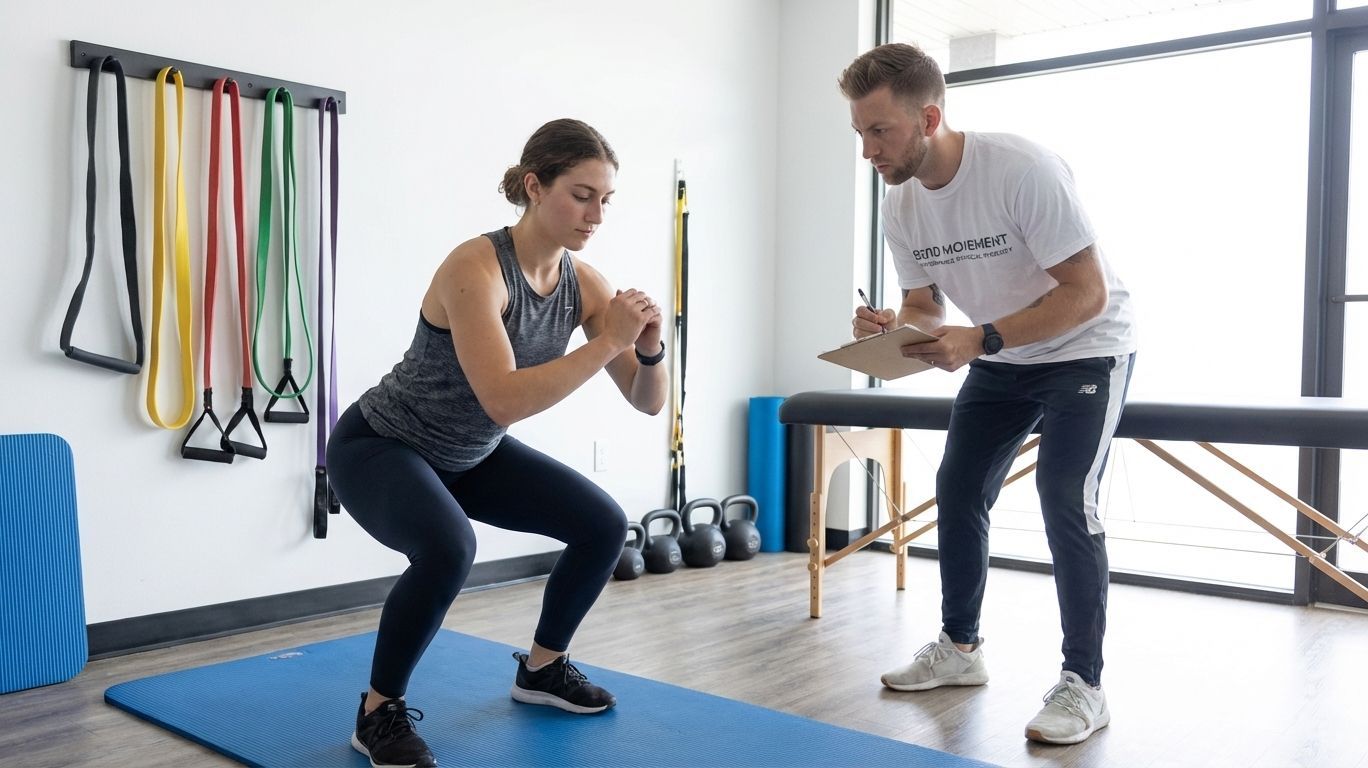
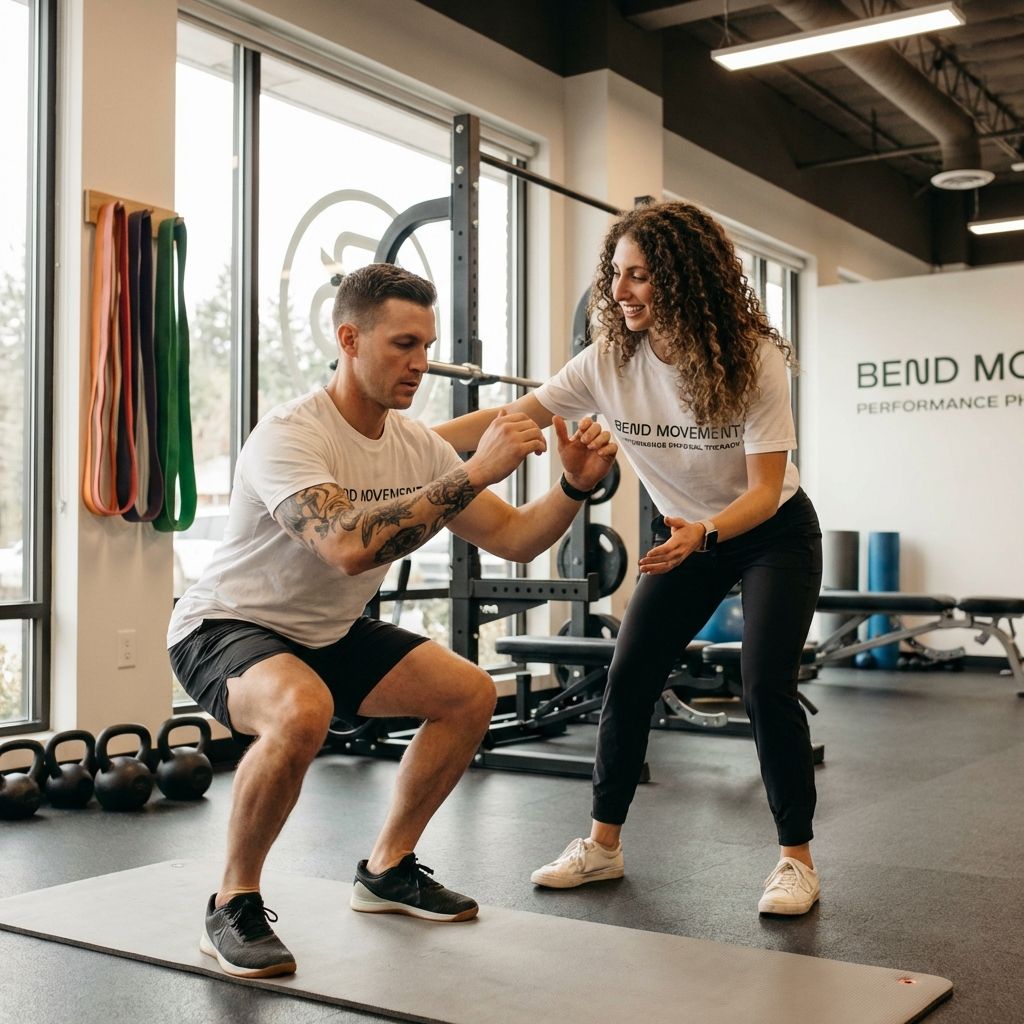
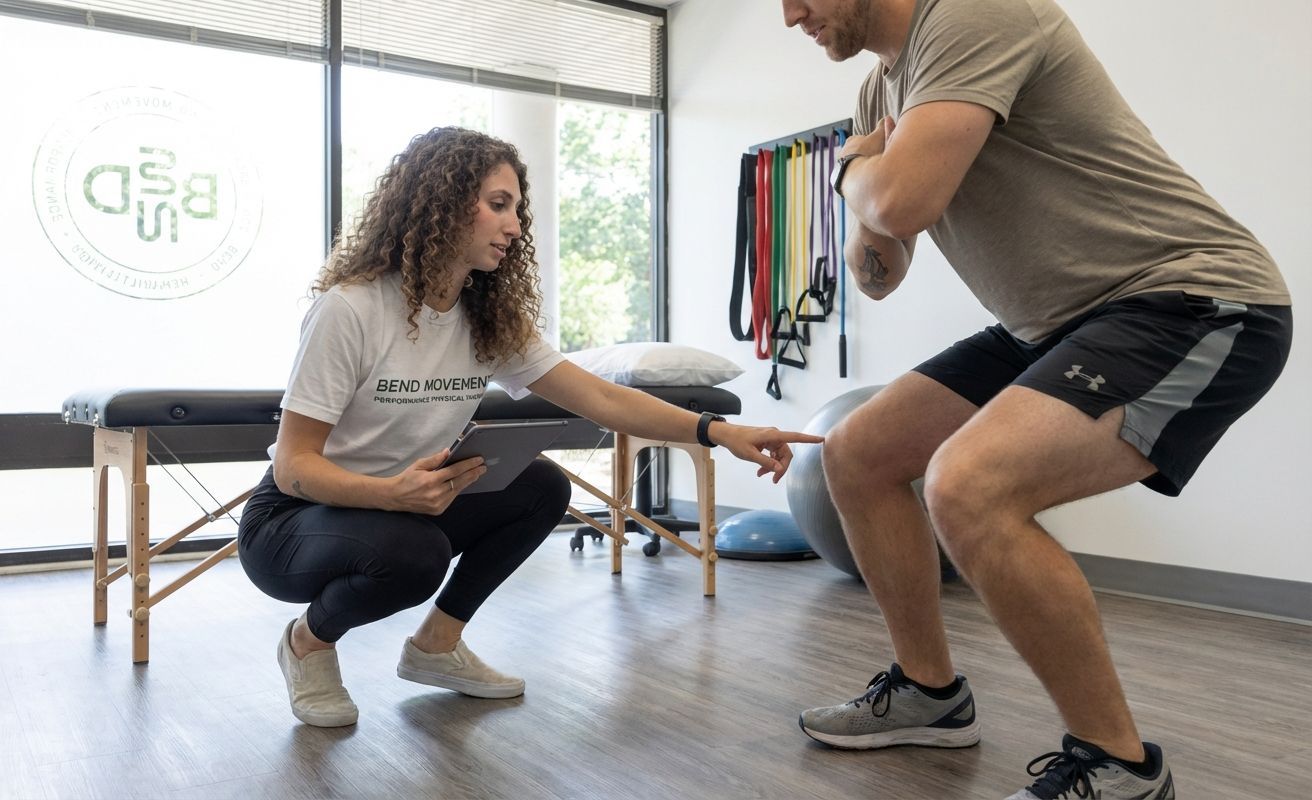
A movement screen looks at how you squat, hinge, reach, balance, and rotate. It can reveal limits in your ankles, hips, or upper back that may be shifting stress to a joint that is now sore. Your results help shape your exercises so you work on what your body actually needs rather than a standard routine.
How Does CrossFit Physical Therapy Help You Stay in the Game?
CrossFit blends Olympic lifting, gymnastics, and high-intensity conditioning. That variety is part of the appeal, but it also means many joints are asked to work hard, often under fatigue. Shoulders, low back, hips, knees, and wrists tend to take the brunt.
Pain in these areas does not always mean you must leave the gym. It does mean your movement and training load deserve a closer look.
Common Issues CrossFit Athletes Bring to Physical Therapy
- Shoulder pain, impingement, and rotator cuff irritation from overhead lifts, kipping, and ring work
- Low back pain that flares with deadlifts, cleans, or high-rep sets
- Hip pain and hip impingement (FAI) that shows up in deep squats
- Knee pain during squats, lunges, or box jumps
- Elbow and wrist pain, including tennis elbow and golfer's elbow, from gripping and barbell work
- Achilles tendinopathy and plantar fasciitis from jumping and running volume
What Does CrossFit-Focused Care Look Like?
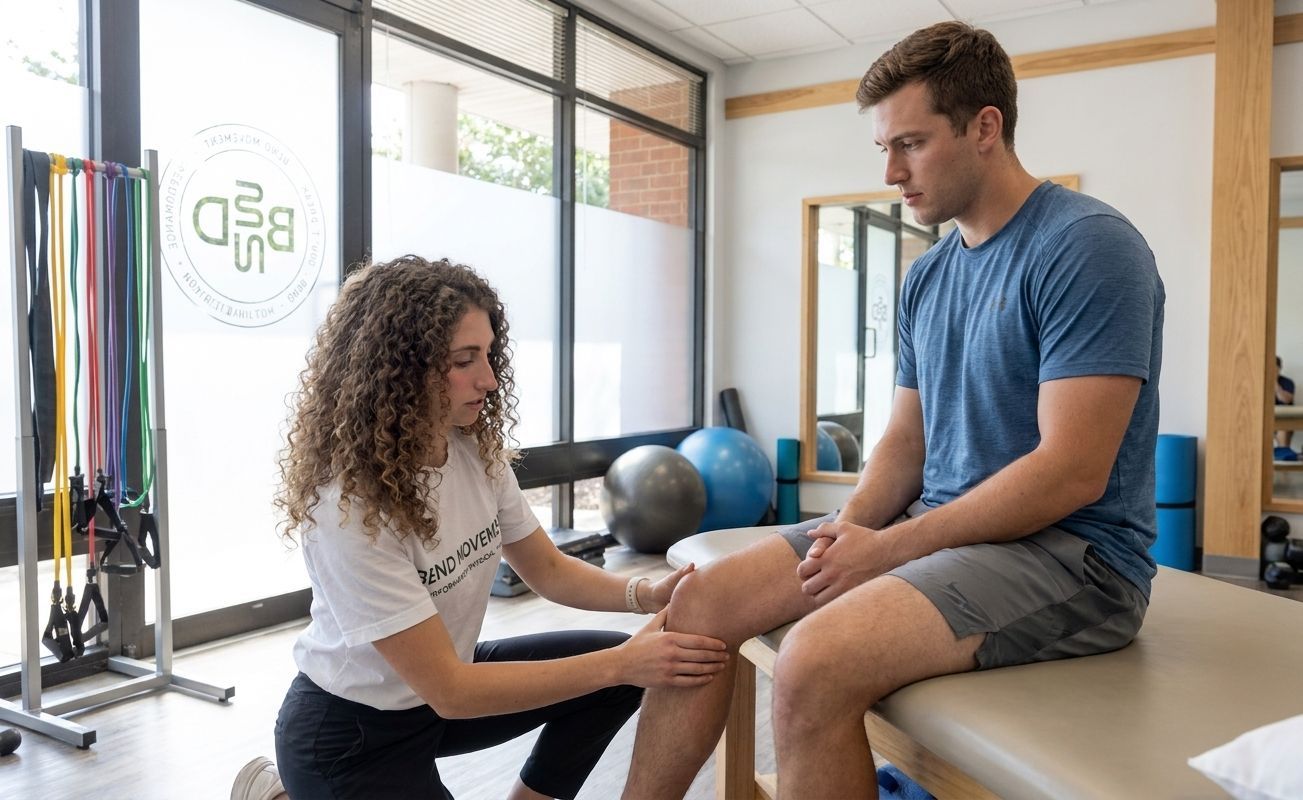
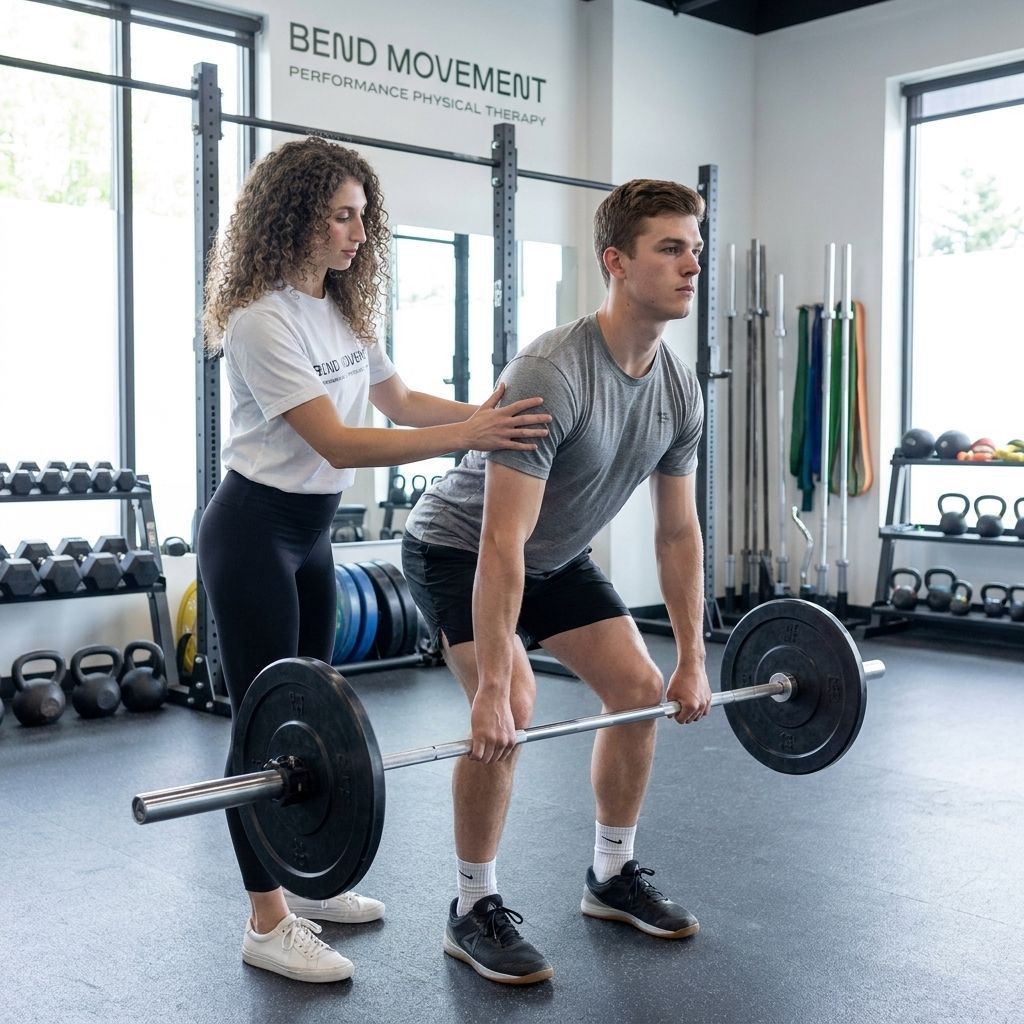
Your therapist examines how you perform the movements that bother you. That may include how you set up for a lift, where you lose position, and which joint is compensating. From there, your plan might combine manual therapy, targeted strengthening, mobility work, and technique cues.
Because your Doctor of Physical Therapy has strength and weightlifting experience, the conversation feels familiar. You can talk about your programming, your competition goals, and which movements you most want to protect.
What Does Running Physical Therapy Include?
Running is repetitive. Over a single mile, your legs absorb impact hundreds of times. When a joint, muscle, or tendon cannot keep up with that workload, pain often follows. Small issues in strength, mobility, or mechanics can add up over weeks of training.
How Do Running Gait Analysis and Form Assessment Help?
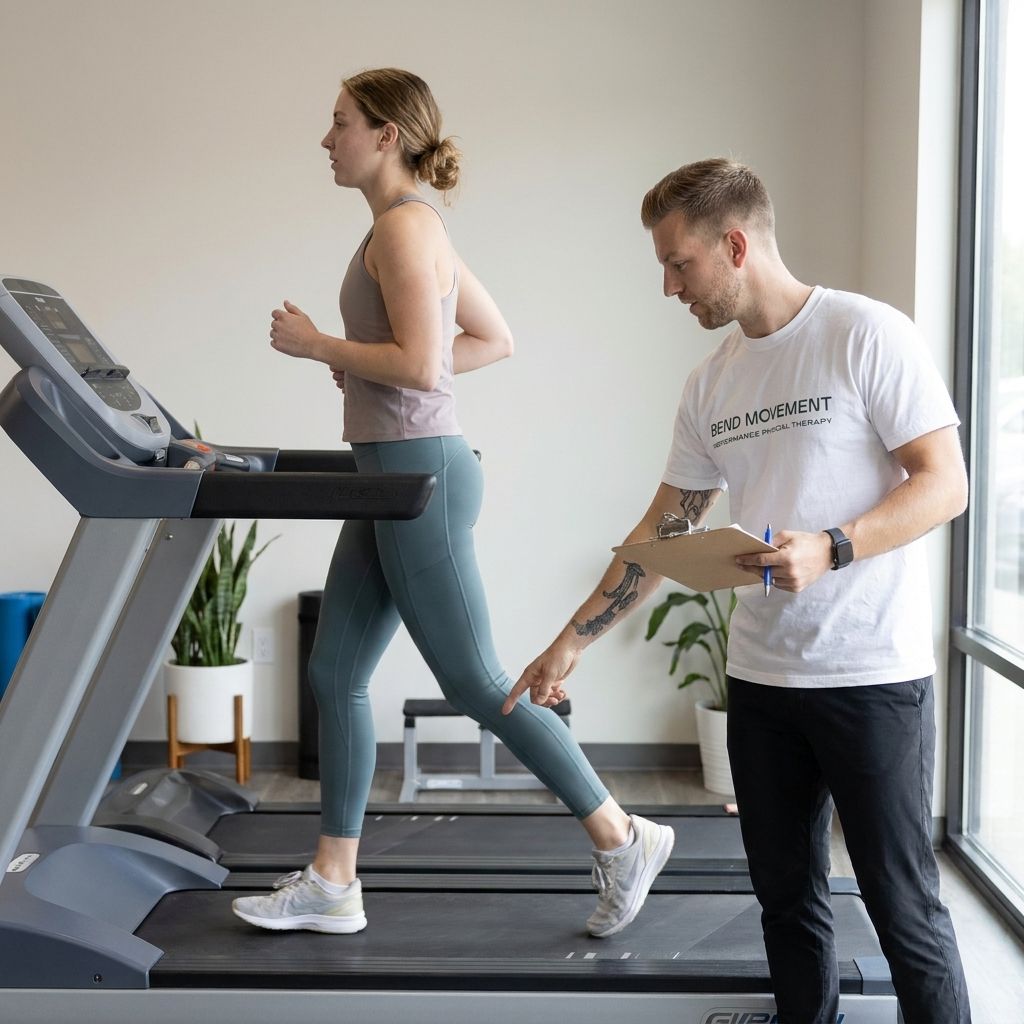
A running gait analysis examines how your body moves as you run. A running form assessment looks at patterns such as how your hips and trunk behave, how your foot lands, and how your stride changes as you tire. Research on runners with patellofemoral pain suggests that strengthening the hips and, in some cases, retraining running mechanics can reduce pain.
At Bend Movement, this information is paired with a movement screen and a hands-on exam. That combination helps your therapist separate what is truly contributing to your pain from what is simply a quirk in how you run. The goal is never to turn you into a textbook runner. The goal is to help you run comfortably and consistently.
Which Running Injuries Can Physical Therapy Address?
- Runner's knee (patellofemoral pain) and IT band syndrome
- Shin splints
- Achilles tendinopathy and plantar fasciitis
- Hamstring strain and groin pain
- Hip pain, including FAI and labral involvement
- Ankle sprains
- Low back pain during or after runs
- Overuse injuries from sudden jumps in mileage or intensity
Whether you are returning from a layoff, building toward a race, or trying to stay healthy through a training block, the plan is built around your running goals.
How Does a Root Cause Approach Work?
Where you feel pain is not always where the problem starts. Knee pain may be tied to how your hip controls your leg. Shoulder pain may be influenced by how your upper back moves. Treating only the sore spot can bring short-term relief, but the pain often returns when you resume training.
A root cause approach asks a bigger question: why is this tissue overloaded in the first place?
What Happens During Your Evaluation?
Your therapist will typically:
- Listen to your story, including your training history, recent changes, and goals
- Screen your movement to see how your body handles the demands of your activity
- Test strength, mobility, and control at the joints involved and the ones around them
- Connect the findings to explain what is driving your symptoms
You leave with a clear explanation, not just a label. Understanding your own body is a powerful part of recovery and helps you make smart choices about training on your own.
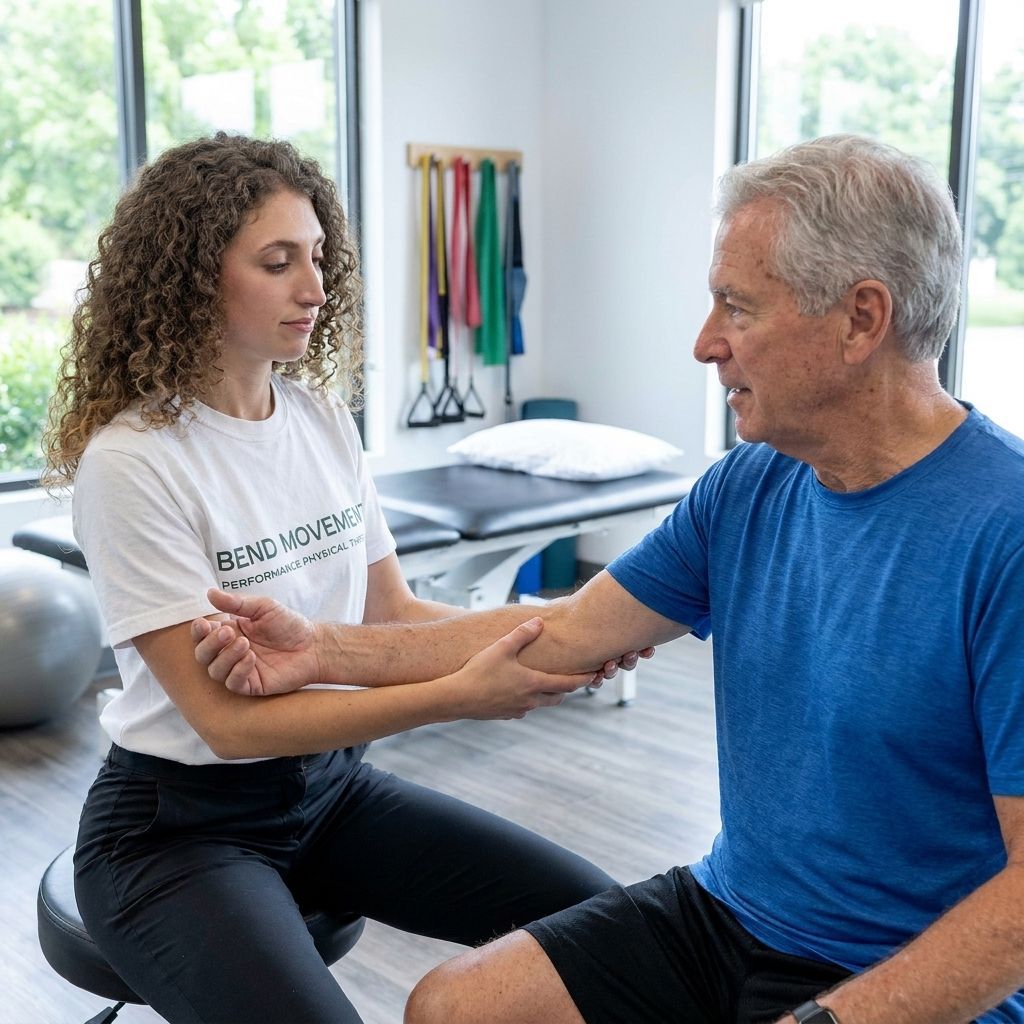
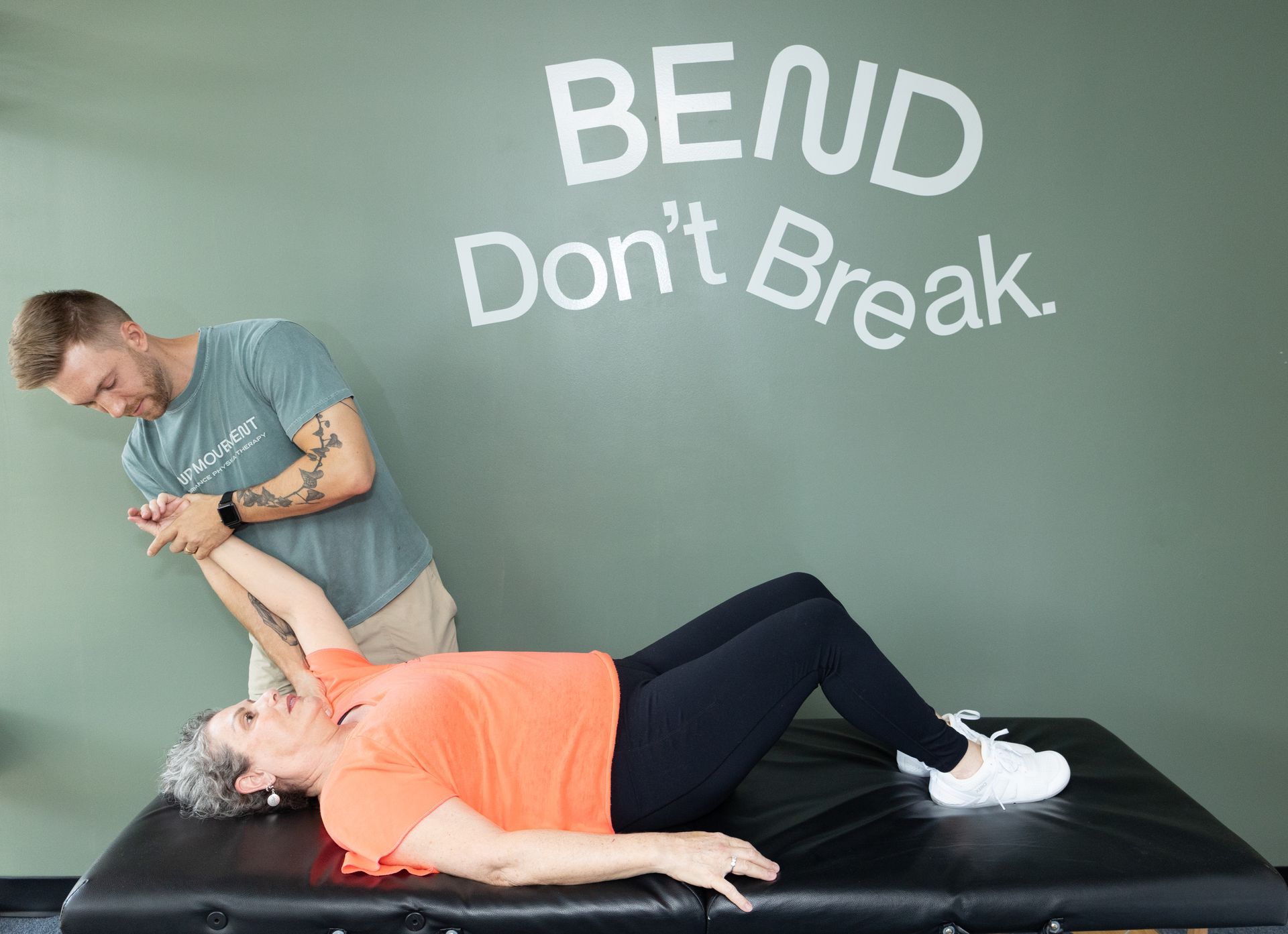
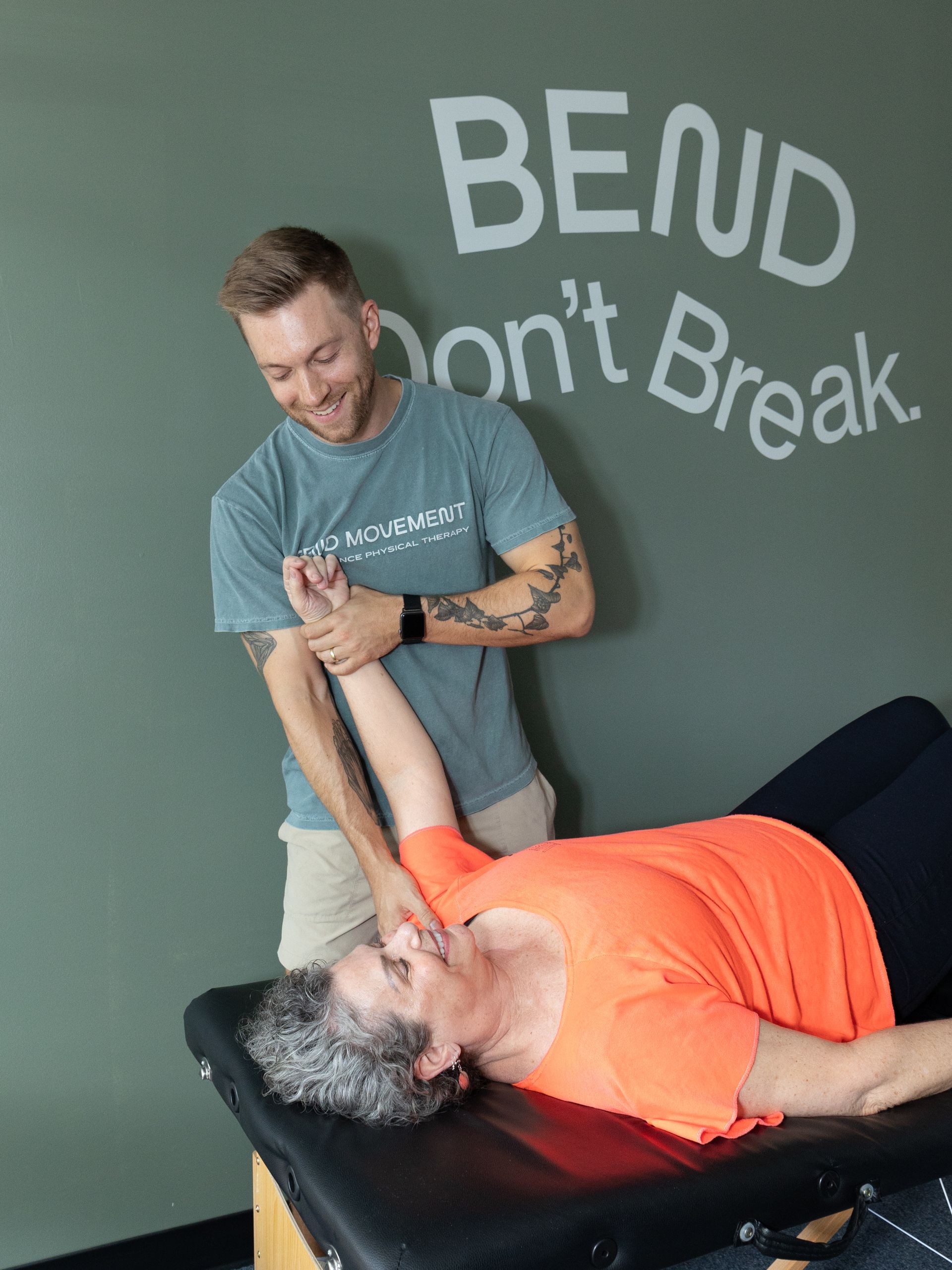
Which Hands-On Treatments Support Your Recovery?
Exercise is the foundation of most rehabilitation, but hands-on care can help you move and feel better so that exercise is more effective. Your plan may include a mix of the following, chosen based on what you need.
- Manual therapy and joint mobilization to improve how stiff joints move
- Soft tissue mobilization, myofascial release, and trigger point therapy to address muscle tension
- Dry needling for muscle tension, trigger points, and persistent pain
- IASTM (Graston) and scraping to work on irritated soft tissue
- Assisted stretching to support mobility
- Electrical stimulation (TENS or NMES) when it fits your recovery stage
- Breathwork and diaphragmatic training to support core control and body awareness
These techniques are tools, not the whole plan. Research generally supports pairing them with active care, which is why therapeutic exercise, neuromuscular re-education, balance and proprioception training, and progressive strengthening are central to your treatment.
Can You Keep Exercising While You Recover?
In many cases, yes. Complete rest can leave you deconditioned and may slow your return to training. For many overuse problems, including tendinopathy, guided and gradually increased loading is a core part of rehabilitation.
That does not mean pushing through pain or ignoring warning signs. It means finding the right dose of activity for where you are right now. At Bend Movement, movement is built into recovery so you are not asked to give up everything you love while you heal.
What Might Modification Look Like?
- A runner with Achilles pain may adjust weekly volume, change terrain, or add strength work while staying active
- A CrossFit athlete with shoulder pain may swap overhead movements for options that keep training going while the shoulder calms down
- A lifter with back pain may change positions, loads, or ranges and continue building strength elsewhere
- A golfer or pickleball player may work on mobility and strength while adjusting practice time
Your therapist will help you decide what is safe and what to avoid for now, and will update that guidance as you improve.
How Do You Return to Sport With Confidence?
Feeling better and being ready are not always the same thing. Many people stop rehabilitation when pain fades, only to have symptoms return when they ramp training back up. A structured return-to-sport progression helps close that gap.
What Does a Return-to-Sport Progression Involve?
As you improve, your plan can progress through:
- Strength and control at the injured area and the joints around it
- Balance and proprioception work to improve stability
- Plyometrics to rebuild the ability to absorb and produce force
- Sport-specific drills that resemble your running, lifting, or court movements
- Return-to-sport testing to assess how you handle the demands of your activity
This approach is also valuable around surgery. If you are recovering from a procedure or preparing for one, prehab and post-surgery rehabilitation can help you rebuild strength and move toward your goals in a planned, supported way.
What Makes Care at Bend Movement Different?
The way care is delivered matters as much as the techniques used. Here is what you can expect when you work with Bend Movement.
- One-on-one care for a full 60-minute session. You work with the same Doctor of Physical Therapy at every visit, so you are never handed off or rushed.
- A root cause focus. The aim is to treat why pain exists, not only where it shows up.
- Highly personalized plans. Your plan is built around your goals, whether that is running a race, lifting heavier, playing sports, or simply moving well in daily life.
- No referral needed. You can reach out when you are ready, without waiting on a doctor's appointment first.
- Continuity of care. After your initial recovery goals are met, ongoing support helps you stay on track and keep making progress.
- A free discovery call. You can speak with the team first to see whether Bend Movement is a good fit before you commit.
Bend Movement also sees people for conditions beyond sport, including neck pain, sciatica, headaches, TMJ pain, arthritis, and balance concerns. If your pain is affecting how you move, the team is happy to talk through your situation.
Ready to Get Back to the Activities You Love?
Pain does not have to mean the end of your training, and you do not have to figure it out alone. With a clear diagnosis, a plan built for your sport, and a therapist who gives you real time and attention, you can move toward your goals with confidence.
If you are a runner, CrossFit athlete, lifter, or recreational player in Henrico or the greater Richmond area, book your free discovery call with Bend Movement today. Tell us what is holding you back and what you want to return to, and we will help you take the next step.